
2 distinct populations in mNSCLC are eligible for treatment with ENHERTU1

Indications

ENHERTU is a HER2-directed antibody and topoisomerase inhibitor conjugate indicated as monotherapy for the treatment of adult patients with1:

  • Unresectable or metastatic NSCLC whose tumors have activating HER2 (ERBB2) mutations, as detected by an FDA-approved test, and who have received a prior systemic therapy
  • Unresectable or metastatic HER2-positive (IHC 3+) solid tumors who have received prior systemic treatment and have no satisfactory alternative treatment options

These indications are approved under accelerated approval based on objective response rate and duration of response. Continued approval for these indications may be contingent upon verification and description of clinical benefit in confirmatory trials.

Study design in HER2-mutant mNSCLC1-3

  • DESTINY-Lung02 is a Phase 2, multicenter, multicohort, randomized, blinded, dose-optimization trial of ENHERTU in adult patients with unresectable or metastatic non-squamous NSCLC who had activating HER2 (ERBB2) mutations and disease progression after a prior systemic therapy1-3
  • Patients with a history of steroid-dependent ILD/pneumonitis, clinically significant cardiac disease, clinically active brain metastases, and ECOG performance status >1 were excluded1
  • Patients received ENHERTU 5.4 mg/kg IV Q3W (n=101) or 6.4 mg/kg IV Q3W (n=50) until disease progression or unacceptable toxicity1
  • Only the results for the recommended dose of 5.4 mg/kg are described due to increased toxicity observed with the higher dose in patients with NSCLC, including ILD/pneumonitis1
  • The major efficacy outcomes were confirmed ORR by BICR using RECIST v1.1 and DOR. The interim efficacy analysis included a prespecified cohort of 52 out of 101 patients1

Study design in HER2+ (IHC 3+) metastatic solid tumors1,4

  • DESTINY-Lung01, DESTINY-PanTumor02, and DESTINY-CRC02 were multicenter clinical trials which included 192 adults with HER2+ (IHC 3+) unresectable or metastatic solid tumors that progressed after ≥1 prior treatment1
    • DESTINY-Lung01 included 17 patients with previously treated, unresectable or metastatic HER2+ (IHC 3+) NSCLC. Patients must have relapsed from or be refractory to standard treatment or have no available standard treatment. Efficacy was assessed in patients with centrally confirmed HER2+ (IHC 3+) NSCLC according to the ASCO-CAP gastric HER2 scoring method1,4
  • All three studies excluded patients with a history of ILD/pneumonitis requiring treatment with steroids or ILD/pneumonitis at screening and clinically significant cardiac disease. Patients were also excluded for active brain metastases or ECOG performance status >11
  • Patients were treated with 5.4 mg/kg IV of ENHERTU Q3W until disease progression, death, withdrawal of consent, or unacceptable toxicity1
  • Confirmed ORR was the major efficacy outcome, DOR was an additional efficacy outcome, and both were assessed by ICR using RECIST v1.11

The only HER2-directed treatment option recommended in NCCN Clinical Practice Guidelines in Oncology (NCCN Guidelines®) for 2 distinct populations in mNSCLC5


HER2-MUTANT mNSCLC5 NCCN Guidelines recommends fam-trastuzumab deruxtecan-nxki (ENHERTU) as a preferred 2L option (NCCN Category 2A) for HER2-mutant mNSCLC.a

HER2+ (IHC 3+) mNSCLC5 NCCN Guidelines recommends fam-trastuzumab deruxtecan-nxki (ENHERTU) as a HER2-directed treatment option (NCCN Category 2A) for previously treated patients with HER2+ (IHC 3+) mNSCLC.b

aFam-trastuzumab deruxtecan-nxki is recommended (Category 2A) as a preferred 2L or subsequent therapy option for HER2-mutant NSCLC for advanced, recurrent or metastatic disease.

bSee the NCCN Guidelines for detailed recommendations.

TEST 2 TREAT

Test for HER2 (ERBB2) mutations via NGS and HER2+ (IHC 3+) via IHC in mNSCLC, and treat appropriate patients with fam-trastuzumab deruxtecan-nxki (ENHERTU)1,5,c,d

cDetect HER2 (ERBB2) mutations using an FDA-approved test.1

dTargeted PCR techniques may also be used to examine ERBB2 mutations.5

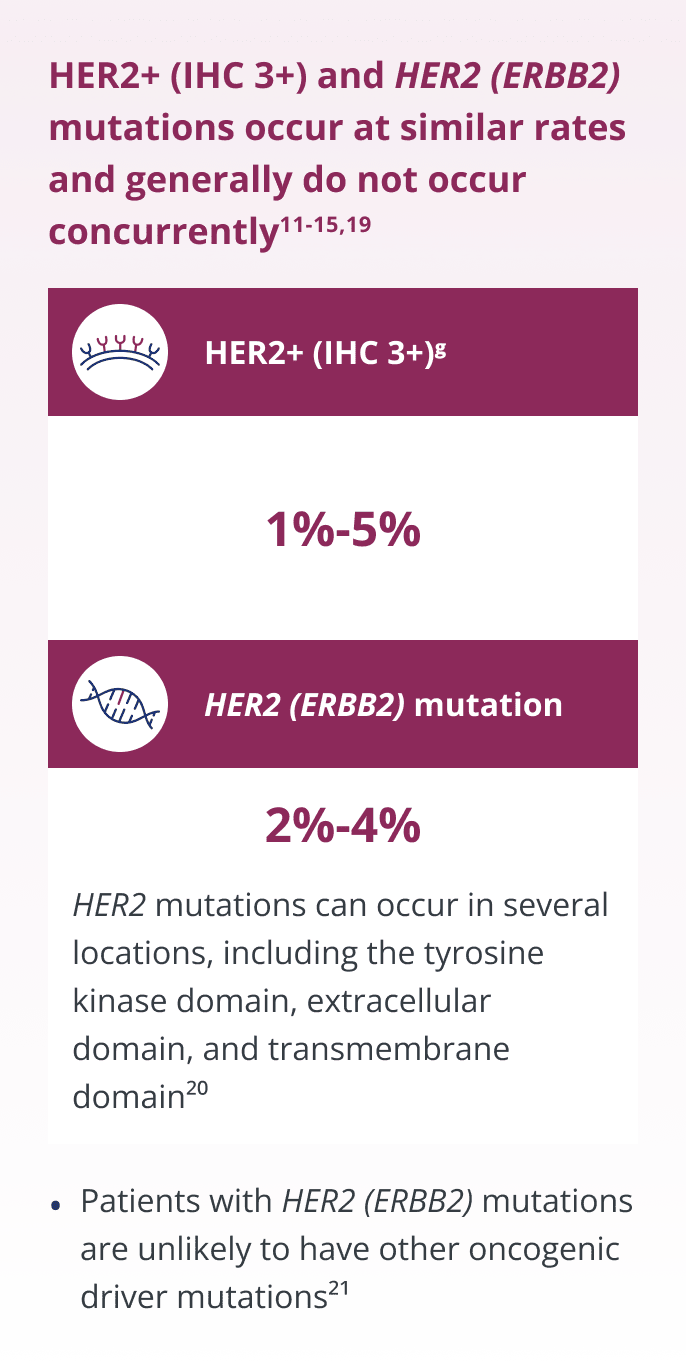
HER2+ (IHC 3+) and HER2 mutations can be oncogenic drivers that contribute to a more aggressive form of mNSCLC6-8

HER2+ (IHC 3+) and activating HER2 (ERBB2) mutations are both actionable biomarkers in certain previously treated patients with mNSCLC1
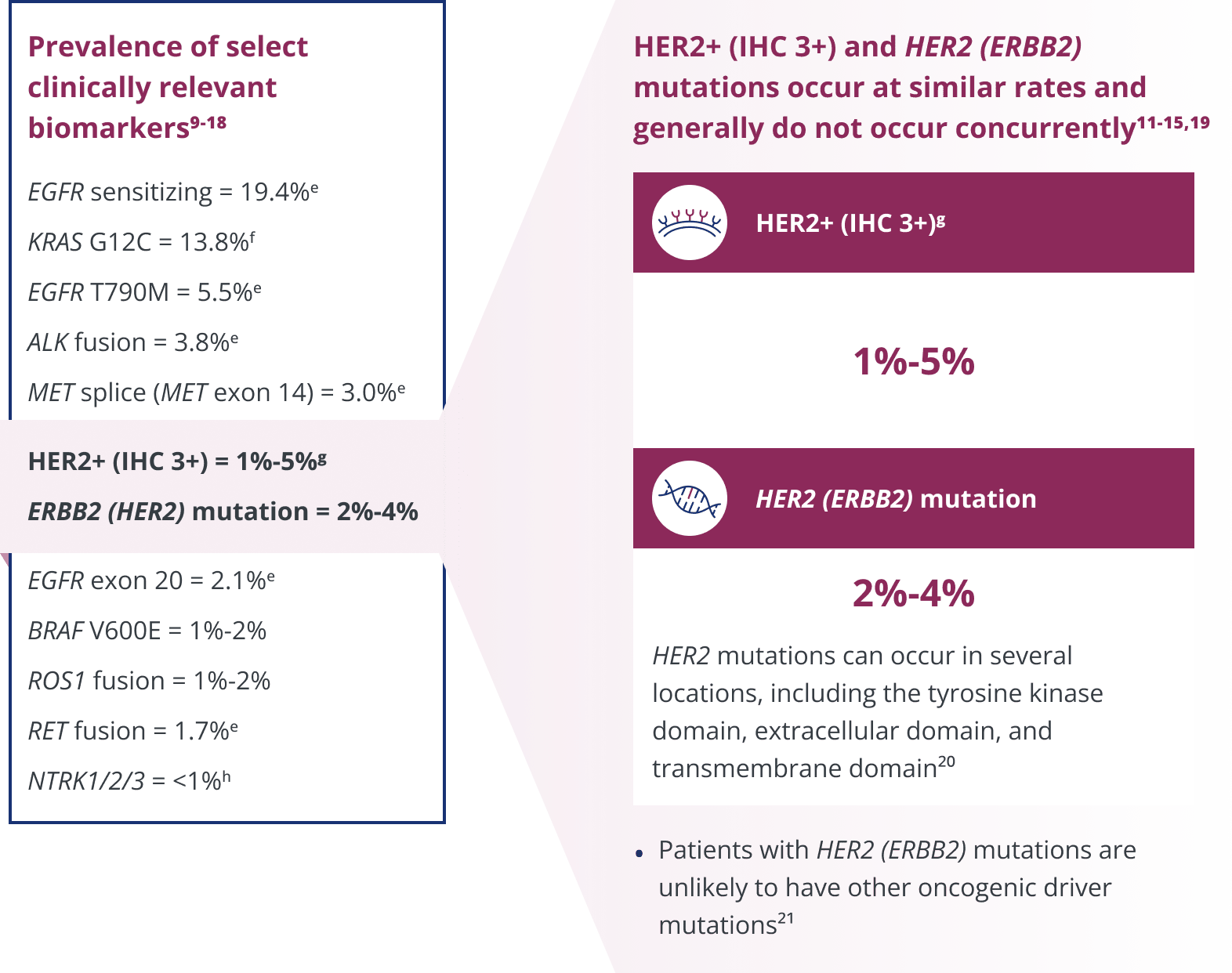
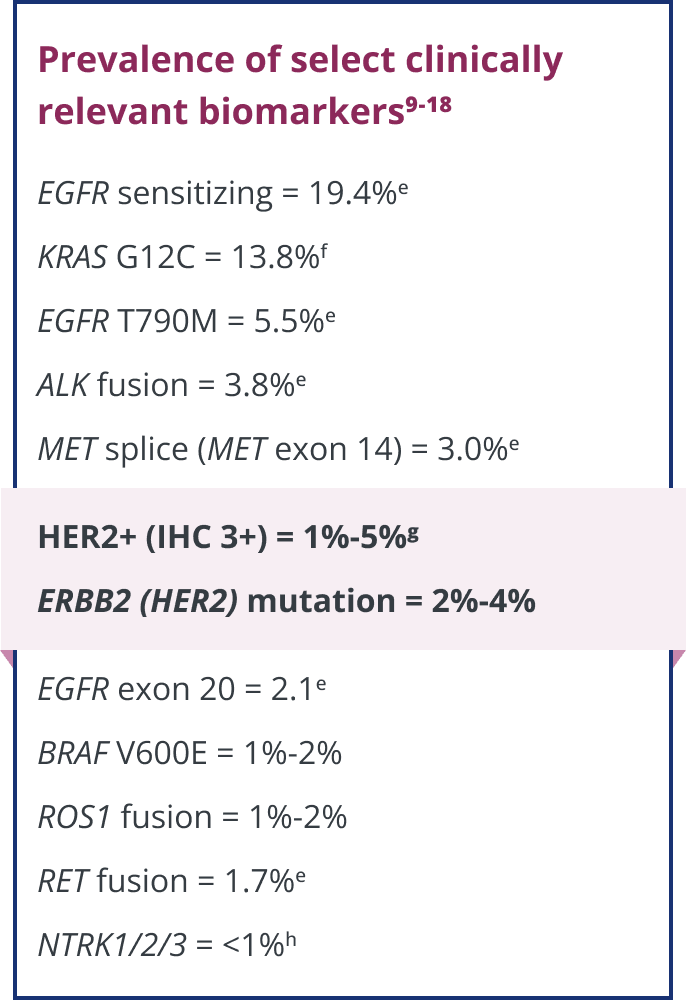
eJordan et al (2017) prospectively analyzed a total of 915 tumors from 860 patients with recurrent or metastatic lung adenocarcinoma for mutations using the Memorial Sloan Kettering-Integrated Mutation Profiling of Actionable Cancer Targets (MSK-IMPACT) assay, a hybridization capture-based, next-generation sequencing platform.9

fNassar et al (2021) extracted data from the registry of the American Association for Cancer Research project Genomics Evidence Neoplasia Information Exchange (GENIE) version 8.0 to study the distribution of KRAS mutations in 32138 patients with cancer across race and sex. KRAS mutations were identified in 1867 samples, most frequently in patients with NSCLC (1443 of 10444). Stage of disease was not disclosed.10

gIndividual tumor prevalence numbers reflect US and ex-US populations. Due to limited testing of IHC in the US, data from a global population have been included.

hFarago et al (2018) examined data on 4872 patients to determine a frequency of 0.23% (n=11) for NTRK gene fusions in NSCLC.18

Detect HER2+ (IHC 3+) and HER2 (ERBB2) mutations, alongside other actionable biomarkers in mNSCLC, to identify eligible patients for targeted treatment5

HER2+ (IHC 3+) and HER2 (ERBB2) mutations are distinct biomarkers that require different testing methods15,22

Alteration HER2 (ERBB2) 
mutation4,23
HER2 protein
overexpression15,24
Biology Mutation in the
HER2 (ERBB2) gene
Overabundance of 
HER2 receptors on the surface of a cell
Test NGS IHC
Alteration HER2 (ERBB2) 
mutation4,23
Biology Mutation in the
HER2 (ERBB2) gene
Test NGS
Alteration HER2 protein
overexpression15,24
Biology Overabundance of HER2 receptors on the surface of a cell
Test IHC

There is little association between the presence of HER2 overexpression (HER2+) and HER2 (ERBB2) mutations15,22

Identify previously treated patients for treatment with fam-trastuzumab deruxtecan-nxki (ENHERTU) based on 2 distinct testing methods: NGS and IHC1,5,i

Plan ahead to ensure adult patients with mNSCLC are tested for both HER2+ (IHC 3+) and HER2 (ERBB2) mutations1,5

  • For newly diagnosed patients, order HER2 IHC testing alongside NGS to inform future treatment plans upon progressioni
  • For currently treated patients, look back at previous results to determine if your patient is HER2+ (IHC 3+) or has a HER2 (ERBB2) mutation

Proactively obtain enough tissue for necessary biomarker testing5,25

If HER2 IHC testing was not performed with NGS at diagnosis, either request retesting of archival tissue or consider rebiopsy if original specimen is not available or adequate.j

Include NGS testing for HER2 (ERBB2) mutations and IHC testing for HER2+ (IHC 3+) as part of your initial biomarker analysis in patients with mNSCLC1,5,i

iTargeted PCR techniques may also be used to examine ERBB2 mutations.5

jAccording to CAP policy, tissue may be archived for at least 10 years.26

2L, second line; ALK, anaplastic lymphoma kinase; ASCO, American Society of Clinical Oncology; BICR, blinded independent central review; BRAF, v-Raf murine sarcoma viral oncogene homolog B; CAP, College of American Pathologists; DOR, duration of response; ECOG, Eastern Cooperative Oncology Group; EGFR, epidermal growth factor receptor; ERBB2, erb-b2 receptor tyrosine kinase 2; HER2, human epidermal growth factor receptor 2; ICR, independent central review; IHC, immunohistochemistry; ILD, interstitial lung disease; IV, intravenous; KRAS, Kirsten rat sarcoma viral oncogene homolog; MET, mesenchymal-epithelial transition; mNSCLC, metastatic non-small cell lung cancer; NCCN, National Comprehensive Cancer Network® (NCCN®); NGS, next-generation sequencing; NSCLC, non-small cell lung cancer; NTRK, neurotrophic tyrosine receptor kinase; ORR, objective response rate; PCR, polymerase chain reaction; Q3W, every 3 weeks; RECIST, Response Evaluation Criteria in Solid Tumors; RET, rearranged during transfection; ROS1, ROS proto-oncogene 1, receptor tyrosine kinase.

WARNING: INTERSTITIAL LUNG DISEASE and EMBRYO-FETAL TOXICITY

  • Interstitial lung disease (ILD) and pneumonitis, including fatal cases, have been reported with ENHERTU. Monitor for and promptly investigate signs and symptoms including cough, dyspnea, fever, and other new or worsening respiratory symptoms. Permanently discontinue ENHERTU in all patients with Grade 2 or higher ILD/pneumonitis. Advise patients of the risk and to immediately report symptoms.
  • Exposure to ENHERTU during pregnancy can cause embryo-fetal harm. Advise patients of these risks and the need for effective contraception.
INDICATIONS

ENHERTU is a HER2-directed antibody and topoisomerase inhibitor conjugate indicated:

  • HER2-Mutant Unresectable or Metastatic Non-Small Cell Lung Cancer (NSCLC)
    • As monotherapy for the treatment of adult patients with unresectable or metastatic NSCLC whose tumors have activating HER2 (ERBB2) mutations, as detected by an FDA-approved test, and who have received a prior systemic therapy

      This indication is approved under accelerated approval based on objective response rate and duration of response. Continued approval for this indication may be contingent upon verification and description of clinical benefit in a confirmatory trial.

  • HER2-Positive (IHC 3+) Unresectable or Metastatic Solid Tumors
    • As monotherapy for the treatment of adult patients with unresectable or metastatic HER2-positive (IHC 3+) solid tumors who have received prior systemic treatment and have no satisfactory alternative treatment options

      This indication is approved under accelerated approval based on objective response rate and duration of response. Continued approval for this indication may be contingent upon verification and description of clinical benefit in a confirmatory trial.

Contraindications

None.

Warnings and Precautions

Interstitial Lung Disease / Pneumonitis

Severe, life-threatening, or fatal interstitial lung disease (ILD), including pneumonitis, can occur in patients treated with ENHERTU. A higher incidence of Grade 1 and 2 ILD/pneumonitis has been observed in patients with moderate renal impairment. Advise patients to immediately report cough, dyspnea, fever, and/or any new or worsening respiratory symptoms. Monitor patients for signs and symptoms of ILD. Promptly investigate evidence of ILD. Evaluate patients with suspected ILD by radiographic imaging. Consider consultation with a pulmonologist. For asymptomatic ILD/pneumonitis (Grade 1), interrupt ENHERTU until resolved to Grade 0, then if resolved in ≤28 days from date of onset, maintain dose. If resolved in >28 days from date of onset, reduce dose 1 level. Consider corticosteroid treatment as soon as ILD/pneumonitis is suspected (e.g., ≥0.5 mg/kg/day prednisolone or equivalent). For symptomatic ILD/pneumonitis (Grade 2 or greater), permanently discontinue ENHERTU. Promptly initiate systemic corticosteroid treatment as soon as ILD/pneumonitis is suspected (e.g., ≥1 mg/kg/day prednisolone or equivalent) and continue for at least 14 days followed by gradual taper for at least 4 weeks.

HER2-Mutant NSCLC and Other Solid Tumors (Including IHC 3+) (5.4 mg/kg)

In patients treated with ENHERTU 5.4 mg/kg, ILD occurred in 12% of patients. Median time to first onset was 5.5 months (range: 0.9 to 31.5). Fatal outcomes due to ILD and/or pneumonitis occurred in 0.9% of patients treated with ENHERTU.

Neutropenia

Severe neutropenia, including febrile neutropenia, can occur in patients treated with ENHERTU. Monitor complete blood counts prior to initiation of ENHERTU and prior to each dose, and as clinically indicated. For Grade 3 neutropenia (Absolute Neutrophil Count [ANC] <1.0 to 0.5 x 10⁹/L), interrupt ENHERTU until resolved to Grade 2 or less, then maintain dose. For Grade 4 neutropenia (ANC <0.5 x 10⁹/L), interrupt ENHERTU until resolved to Grade 2 or less, then reduce dose by 1 level. For febrile neutropenia (ANC <1.0 x 10⁹/L and temperature >38.3º C or a sustained temperature of ≥38º C for more than 1 hour), interrupt ENHERTU until resolved, then reduce dose by 1 level.

HER2-Mutant NSCLC and Other Solid Tumors (Including IHC 3+) (5.4 mg/kg)

In patients treated with ENHERTU 5.4 mg/kg, a decrease in neutrophil count was reported in 65% of patients. Nineteen percent had Grade 3 or 4 decreased neutrophil count. Median time to first onset of decreased neutrophil count was 22 days (range: 2 to 939). Febrile neutropenia was reported in 1.2% of patients.

Left Ventricular Dysfunction

Patients treated with ENHERTU may be at increased risk of developing left ventricular dysfunction. Left ventricular ejection fraction (LVEF) decrease has been observed with anti-HER2 therapies, including ENHERTU. Assess LVEF prior to initiation of ENHERTU and at regular intervals during treatment as clinically indicated. Manage LVEF decrease through treatment interruption. When LVEF is >45% and absolute decrease from baseline is 10-20%, continue treatment with ENHERTU. When LVEF is 40-45% and absolute decrease from baseline is <10%, continue treatment with ENHERTU and repeat LVEF assessment within 3 weeks. When LVEF is 40-45% and absolute decrease from baseline is 10-20%, interrupt ENHERTU and repeat LVEF assessment within 3 weeks. If LVEF has not recovered to within 10% from baseline, permanently discontinue ENHERTU. If LVEF recovers to within 10% from baseline, resume treatment with ENHERTU at the same dose. When LVEF is <40% or absolute decrease from baseline is >20%, interrupt ENHERTU and repeat LVEF assessment within 3 weeks. If LVEF of <40% or absolute decrease from baseline of >20% is confirmed, permanently discontinue ENHERTU. Permanently discontinue ENHERTU in patients with symptomatic congestive heart failure. Treatment with ENHERTU has not been studied in patients with a history of clinically significant cardiac disease or LVEF <50% prior to initiation of treatment.

HER2-Mutant NSCLC and Other Solid Tumors (Including IHC 3+) (5.4 mg/kg)

In patients treated with ENHERTU 5.4 mg/kg, LVEF decrease was reported in 4.6% of patients, of which 0.6% were Grade 3 or 4.

Embryo-Fetal Toxicity

ENHERTU can cause fetal harm when administered to a pregnant woman. Advise patients of the potential risks to a fetus. Verify the pregnancy status of females of reproductive potential prior to the initiation of ENHERTU. Advise females of reproductive potential to use effective contraception during treatment and for 7 months after the last dose of ENHERTU. Advise male patients with female partners of reproductive potential to use effective contraception during treatment with ENHERTU and for 4 months after the last dose of ENHERTU.

Additional Dose Modifications

Thrombocytopenia

For Grade 3 thrombocytopenia (platelets <50 to 25 x 109/L) interrupt ENHERTU until resolved to Grade 1 or less, then maintain dose. For Grade 4 thrombocytopenia (platelets <25 x 109/L) interrupt ENHERTU until resolved to Grade 1 or less, then reduce dose by 1 level.

Adverse Reactions

HER2-Mutant NSCLC and Other Solid Tumors (Including IHC 3+) (5.4 mg/kg)

The pooled safety population reflects exposure to ENHERTU 5.4 mg/kg intravenously every 3 weeks in 2233 patients in Study DS8201-A-J101 (NCT02564900), DESTINY-Breast01, DESTINY-Breast02, DESTINY-Breast03, DESTINY-Breast04, DESTINY-Breast06, DESTINY-Lung01, DESTINY-Lung02, DESTINY-CRC02, and DESTINY-PanTumor02. Among these patients, 67% were exposed for >6 months and 38% were exposed for >1 year. In this pooled safety population, the most common (≥20%) adverse reactions, including laboratory abnormalities, were decreased white blood cell count (73%), nausea (72%), decreased hemoglobin (67%), decreased neutrophil count (65%), decreased lymphocyte count (60%), fatigue (55%), decreased platelet count (48%), increased aspartate aminotransferase (46%), increased alanine aminotransferase (44%), increased blood alkaline phosphatase (39%), vomiting (38%), alopecia (37%), constipation (32%), decreased blood potassium (32%), decreased appetite (31%), diarrhea (30%), and musculoskeletal pain (24%).

HER2-Mutant Unresectable or Metastatic NSCLC (5.4 mg/kg)

DESTINY-Lung02 evaluated 2 dose levels (5.4 mg/kg [n=101] and 6.4 mg/kg [n=50]); however, only the results for the recommended dose of 5.4 mg/kg intravenously every 3 weeks are described below due to increased toxicity observed with the higher dose in patients with NSCLC, including ILD/pneumonitis.

The safety of ENHERTU was evaluated in 101 patients with HER2-mutant unresectable or metastatic NSCLC who received ENHERTU 5.4 mg/kg intravenously once every 3 weeks until disease progression or unacceptable toxicity in DESTINY‑Lung02. Nineteen percent of patients were exposed for >6 months.

Serious adverse reactions occurred in 30% of patients receiving ENHERTU. Serious adverse reactions in >1% of patients who received ENHERTU were ILD/pneumonitis, thrombocytopenia, dyspnea, nausea, pleural effusion, and increased troponin I. Fatality occurred in 1 patient with suspected ILD/pneumonitis (1%).

ENHERTU was permanently discontinued in 8% of patients. Adverse reactions which resulted in permanent discontinuation of ENHERTU were ILD/pneumonitis, diarrhea, decreased blood potassium, hypomagnesemia, myocarditis, and vomiting. Dose interruptions of ENHERTU due to adverse reactions occurred in 23% of patients. Adverse reactions which required dose interruption (>2%) included neutropenia and ILD/pneumonitis. Dose reductions due to an adverse reaction occurred in 11% of patients.

The most common (≥20%) adverse reactions, including laboratory abnormalities, were nausea (61%), decreased white blood cell count (60%), decreased hemoglobin (58%), decreased neutrophil count (52%), decreased lymphocyte count (43%), decreased platelet count (40%), decreased albumin (39%), increased aspartate aminotransferase (35%), increased alanine aminotransferase (34%), fatigue (32%), constipation (31%), decreased appetite (30%), vomiting (26%), increased alkaline phosphatase (22%), and alopecia (21%).

HER2-Positive (IHC 3+) Unresectable or Metastatic Solid Tumors

The safety of ENHERTU was evaluated in 347 adult patients with unresectable or metastatic HER2-positive (IHC 3+) solid tumors who received ENHERTU 5.4 mg/kg intravenously once every 3 weeks in DESTINY-Breast01, DESTINY-PanTumor02, DESTINY-Lung01, and DESTINY-CRC02. The median duration of treatment was 8.3 months (range 0.7 to 30.2).

Serious adverse reactions occurred in 34% of patients receiving ENHERTU. Serious adverse reactions in >1% of patients who received ENHERTU were sepsis, pneumonia, vomiting, urinary tract infection, abdominal pain, nausea, pneumonitis, pleural effusion, hemorrhage, COVID-19, fatigue, acute kidney injury, anemia, cellulitis, and dyspnea. Fatalities due to adverse reactions occurred in 6.3% of patients including ILD/pneumonitis (2.3%), cardiac arrest (0.6%), COVID-19 (0.6%), and sepsis (0.6%). The following events occurred in 1 patient each (0.3%): acute kidney injury, cerebrovascular accident, general physical health deterioration, pneumonia, and hemorrhagic shock.

ENHERTU was permanently discontinued in 15% of patients, of which ILD/pneumonitis accounted for 10%. Dose interruptions due to adverse reactions occurred in 48% of patients. The most frequent adverse reactions (>2%) associated with dose interruption were decreased neutrophil count, anemia, COVID-19, fatigue, decreased white blood cell count, and ILD/pneumonitis. Dose reductions occurred in 27% of patients treated with ENHERTU. The most frequent adverse reactions (>2%) associated with dose reduction were fatigue, nausea, decreased neutrophil count, ILD/pneumonitis, and diarrhea.

The most common (≥20%) adverse reactions, including laboratory abnormalities, were decreased white blood cell count (75%), nausea (69%), decreased hemoglobin (67%), decreased neutrophil count (66%), fatigue (59%), decreased lymphocyte count (58%), decreased platelet count (51%), increased aspartate aminotransferase (45%), increased alanine aminotransferase (44%), increased blood alkaline phosphatase (36%), vomiting (35%), decreased appetite (34%), alopecia (34%), diarrhea (31%), decreased blood potassium (29%), constipation (28%), decreased sodium (22%), stomatitis (20%), and upper respiratory tract infection (20%).

Use in Specific Populations

  • Pregnancy: ENHERTU can cause fetal harm when administered to a pregnant woman. Advise patients of the potential risks to a fetus. There are clinical considerations if ENHERTU is used in pregnant women, or if a patient becomes pregnant within 7 months after the last dose of ENHERTU.
  • Lactation: There are no data regarding the presence of ENHERTU in human milk, the effects on the breastfed child, or the effects on milk production. Because of the potential for serious adverse reactions in a breastfed child, advise women not to breastfeed during treatment with ENHERTU and for 7 months after the last dose.
  • Females and Males of Reproductive Potential: Pregnancy testing: Verify pregnancy status of females of reproductive potential prior to initiation of ENHERTU. Contraception: Females: ENHERTU can cause fetal harm when administered to a pregnant woman. Advise females of reproductive potential to use effective contraception during treatment with ENHERTU and for 7 months after the last dose. Males: Advise male patients with female partners of reproductive potential to use effective contraception during treatment with ENHERTU and for 4 months after the last dose. Infertility: ENHERTU may impair male reproductive function and fertility.
  • Pediatric Use: Safety and effectiveness of ENHERTU have not been established in pediatric patients.
  • Geriatric Use: Of the 101 patients with HER2-mutant unresectable or metastatic NSCLC treated with ENHERTU 5.4 mg/kg, 40% were ≥65 years and 8% were ≥75 years. No overall differences in efficacy or safety were observed between patients ≥65 years of age compared to younger patients. Of the 192 patients with HER2-positive (IHC 3+) unresectable or metastatic solid tumors treated with ENHERTU 5.4 mg/kg in DESTINY-PanTumor02, DESTINY-Lung01, or DESTINY-CRC02, 39% were ≥65 years and 9% were ≥75 years. No overall differences in efficacy or safety were observed between patients ≥65 years of age compared to younger patients.
  • Renal Impairment: A higher incidence of Grade 1 and 2 ILD/pneumonitis has been observed in patients with moderate renal impairment. Monitor patients with moderate renal impairment more frequently. The recommended dosage of ENHERTU has not been established for patients with severe renal impairment (CLcr <30 mL/min).
  • Hepatic Impairment: In patients with moderate hepatic impairment, due to potentially increased exposure, closely monitor for increased toxicities related to the topoisomerase inhibitor, DXd. The recommended dosage of ENHERTU has not been established for patients with severe hepatic impairment (total bilirubin >3 times ULN and any AST).

To report SUSPECTED ADVERSE REACTIONS, contact Daiichi Sankyo, Inc. at 1-877-437-7763 or FDA at 1-800-FDA-1088 or fda.gov/medwatch.

Please click here for full Prescribing Information, including Boxed WARNINGS, and click here for Medication Guide.

INDICATIONS

ENHERTU is a HER2-directed antibody and topoisomerase inhibitor conjugate indicated:

  • HER2-Mutant Unresectable or Metastatic Non-Small Cell Lung Cancer (NSCLC)
    • As monotherapy for the treatment of adult patients with unresectable or metastatic NSCLC whose tumors have activating HER2 (ERBB2) mutations, as detected by an FDA-approved test, and who have received a prior systemic therapy

      This indication is approved under accelerated approval based on objective response rate and duration of response. Continued approval for this indication may be contingent upon verification and description of clinical benefit in a confirmatory trial.

  • HER2-Positive (IHC 3+) Unresectable or Metastatic Solid Tumors
    • As monotherapy for the treatment of adult patients with unresectable or metastatic HER2-positive (IHC 3+) solid tumors who have received prior systemic treatment and have no satisfactory alternative treatment options

      This indication is approved under accelerated approval based on objective response rate and duration of response. Continued approval for this indication may be contingent upon verification and description of clinical benefit in a confirmatory trial.

References
  • ENHERTU. Prescribing information. Daiichi Sankyo, Inc.; 2025.
  • Trastuzumab deruxtecan in participants with HER2-mutated metastatic non-small cell lung cancer (NSCLC) (DESTINY-LUNG02). ClinicalTrials.gov identifier: NCT04644237. Updated July 12, 2021. Accessed August 11, 2022. https://www.clinicaltrials.gov/ct2/show/NCT04644237
  • Smit EF, Li BT, Mazieres J, et al. Trastuzumab deruxtecan (T-DXd) in patients with HER2-mutated (HER2m) metastatic non–small cell lung cancer (NSCLC): a phase 2 study (DESTINY-Lung02). Poster presented at: ESMO Congress 2021; September 16-21, 2021.
  • Li BT, Smit EF, Goto Y, et al; DESTINY-Lung01 Trial Investigators. Trastuzumab deruxtecan in HER2-mutant non–small-cell lung cancer. N Engl J Med. 2022;386(3):241-251.
  • Referenced with permission from the NCCN Clinical Practice Guidelines in Oncology (NCCN Guidelines®) for Non-Small Cell Lung Cancer V.3.2026. © National Comprehensive Cancer Network, Inc. 2025. All rights reserved. Accessed December 24, 2025. To view the most recent and complete version of the guideline, go online to NCCN.org. NCCN makes no warranties of any kind whatsoever regarding their content, use or application and disclaims any responsibility for their application or use in any way.
  • Liu L, Shao X, Gao W, et al. The role of human epidermal growth factor receptor 2 as a prognostic factor in lung cancer: a meta-analysis of published data. J Thorac Oncol. 2010;5(12):1922-1932.
  • Kim EK, Kim KA, Lee CY, Shim HS. The frequency and clinical impact of HER2 alterations in lung adenocarcinoma. PLoS One. 2017;12(2):e0171280.
  • Pillai RN, Behera M, Berry LD, et al. HER2 mutations in lung adenocarcinomas: a report from the Lung Cancer Mutation Consortium. Cancer. 2017;123(21):4099-4105.
  • Jordan EJ, Kim HR, Arcila ME, et al. Prospective comprehensive molecular characterization of lung adenocarcinomas for efficient patient matching to approved and emerging therapies. Cancer Discov. 2017;7(6):596-609.
  • Nassar AH, Adib E, Kwiatkowski DJ. Distribution of KRASG12C somatic mutations across race, sex, and cancer type. N Engl J Med. 2021;384(2):185-187.
  • Uzunparmak B, Haymaker C, Raso G, et al. HER2-low expression in patients with advanced or metastatic solid tumors. Ann Oncol. 2023;34(11):1035-1046.
  • Heinmöller P, Gross C, Beyser K, et al. HER2 status in non-small cell lung cancer: results from patient screening for enrollment to a phase II study of herceptin. Clin Cancer Res. 2003;9(14):5238-5244.
  • Zinner RG, Glisson BS, Fossella FV, et al. Trastuzumab in combination with cisplatin and gemcitabine in patients with Her2-overexpressing, untreated, advanced non-small cell lung cancer: report of a phase II trial and findings regarding optimal identification of patients with Her2-overexpressing disease. Lung Cancer. 2004;44(1):99-110.
  • Takenaka M, Hanagiri T, Shinohara S, et al. The prognostic significance of HER2 overexpression in non-small cell lung cancer. Anticancer Res. 2011;31(12):4631-4636.
  • Zhao J, Xia Y. Targeting HER2 alterations in non–small-cell lung cancer: a comprehensive review. JCO Precis Oncol. 2020;4:411-425. doi:10.1200/PO.19.00333
  • Planchard D, Sanborn RE, Negrao MV, Vaishnavi A, Smit EF. BRAFV600E-mutant metastatic NSCLC: disease overview and treatment landscape. NPJ Precis Oncol. 2024;8(1):90.
  • Boulanger MC, Schneider JL, Lin JJ. Advances and future directions in ROS1 fusion-positive lung cancer. Oncologist. 2024;29(11):943-956.
  • Farago AF, Taylor MS, Doebele RC, et al. Clinicopathologic features of non-small-cell lung cancer harboring an NTRK gene fusion. JCO Precis Oncol. 2018;2018:PO.18.00037.
  • Ninomiya K, Hata T, Yoshioka H, et al. A prospective cohort study to define the clinical features and outcome of lung cancers harboring HER2 aberration in Japan (HER2-CS STUDY). Chest. 2019;156(2):357-366.
  • Robichaux JP, Elamin YY, Vijayan RSK, et al. Pan-cancer landscape and analysis of ERBB2 mutations identifies poziotinib as a clinically active inhibitor and enhancer of T-DM1 activity. Cancer Cell. 2019;36(4):444-457.e7.
  • Ismail A, Desai A, Boumber Y. HER2 alterations in non-small cell lung cancer (NSCLC): from biology and testing to advances in treatment modalities. Front Oncol. 2025;15:1624124.
  • Jebbink M, de Langen AJ, Boelens MC, Monkhorst K, Smit EF. The force of HER2–a druggable target in NSCLC? Cancer Treat Rev. 2020;86:101996.
  • Ren S, Wang J, Ying J, et al. Consensus for HER2 alterations testing in non-small-cell lung cancer [published correction appears in ESMO Open. 2022;7(3):100482]. ESMO Open. 2022;7(1):100395. Published online February 8, 2022. doi:10.1016/j.esmoop.2022.100395
  • Rubin I, Yarden Y. The basic biology of HER2. Ann Oncol. 2001;12(suppl 1):S3-S8.
  • Bartley AN, Washington MK, Colasacco C, et al. HER2 testing and clinical decision making in gastroesophageal adenocarcinoma: guideline from the College of American Pathologists, American Society for Clinical Pathology, and the American Society of Clinical Oncology. J Clin Oncol. 2017;35(4):446-464.
  • Policy PP. Minimum period of retention of laboratory records and materials. College of American Pathologists. August 1995. Updated January 2021. Accessed October 21, 2024. https://www.cap.org/gated-assets/uploads/private/cap-retention-laboratory-records-and-materials.pdf
Back to top